


Mathematical applications of architecture: The fusion of mathematics and architectural design

Architecture is not merely the construction of space, but a fusion of art and science. Mathematics, in particular, plays a crucial role in architectural design. By translating abstract mathematical concepts into spatial ideas and visual forms, innovative architecture that transcends conventional concepts of gravity and structure can be created. This article explores how mathematical theories such as chaos theory, topology, and higher-dimensional geometry are applied to architecture, and introduces the allure of architectural designs that defy gravity and create a sense of weightlessness.
What are the mathematical applications of architecture?
The application of mathematics in architecture goes beyond mere calculations and structural design. By incorporating abstract mathematical theories into architectural forms and spatial configurations, new designs previously unthinkable in architecture become possible.
For example, chaos theory can help us understand complex and unpredictable patterns, allowing us to reflect the irregular shapes of nature in architecture. This results in dynamic and vibrant architectural spaces.
Topology , a branch of mathematics that studies the continuity and deformation properties of shapes, is used in architecture to design curved surfaces and complex interconnected structures. This allows for the creation of fluid and organic spaces that differ from conventional linear architecture.
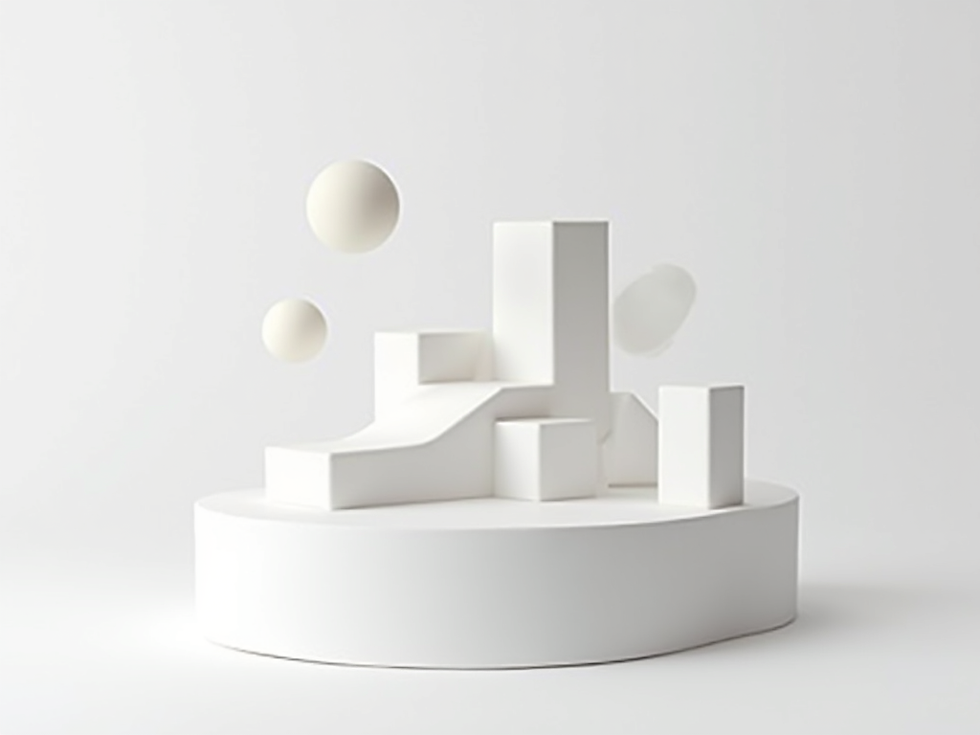
Furthermore, higher-dimensional geometry deals with the concept of space beyond three dimensions, and by visually representing this, it becomes possible to create architectural designs that have a floating, gravity-defying feel.
By applying these mathematical theories, architecture is evolving from mere physical structures into sensory and philosophical spaces.

Concrete examples of the fusion of mathematics and architectural design
There are concrete examples all over the world of applying mathematical theory to architecture. Here are some representative examples.
Fractal architecture
Fractals are complex patterns that exhibit self-similarity and are found in many shapes in nature. In architecture, incorporating fractal structures allows repeating patterns to spread throughout the space, resulting in visually rich designs. For example, Gaudí's Sagrada Familia contains many fractal elements.
Parametric design
This method generates architectural shapes using mathematical functions and algorithms. This allows for the precise design of complex curved surfaces and asymmetrical shapes, enabling designs that were difficult to achieve with conventional design methods.
Topological spatial design
By applying the concept of topology, the designs create continuously deformable spaces and buildings with ambiguous boundaries. This allows for the natural guidance of user movement and visual flow.
These examples demonstrate how mathematical theories can greatly expand architectural creativity.

Is mathematics necessary to become an architect?
To what extent is mathematical knowledge necessary for someone aspiring to become an architect? In short, mathematics is one of the most important skills for an architect .
In architectural design, a mathematical understanding is essential for structural calculations, material strength analysis, and spatial dimension design. Especially in modern architecture, computer-aided design is the norm, and knowledge of mathematical algorithms and geometry significantly impacts the quality of the design.
However, not all architects need to be highly skilled mathematicians. A basic understanding of mathematics and the ability to collaborate with experts when necessary is sufficient. What's important is the willingness to apply mathematical thinking to design and the flexibility to actively incorporate the latest technologies.
Architects who want to deepen their application of mathematics can create more innovative architectural designs by studying advanced mathematical fields such as chaos theory and topology.
The potential of architectural design that transcends gravity
Our practice of "mathematical architecture" challenges the creation of spaces that transcend the concept of gravity. By using mathematical theories, it is possible to design buildings that have a sense of weightlessness, defying physical constraints.
For example, from the perspective of higher-dimensional geometry , shapes that do not exist in three-dimensional space can be visually represented, creating the illusion that they are floating in mid-air. This transforms buildings from mere "structures" into works of art and spaces for new experiences.
Furthermore, designs that apply chaos theory incorporate the irregularities and dynamic changes of nature, giving the architecture a sense of change over time. As a result, the space feels not static, but as if it has a life of its own.
Such innovative architecture can be applied to a wide range of settings, from private residences to public facilities and commercial spaces, offering users new sensations and experiences.

Future prospects of mathematical architectural design
The integration of mathematics and architecture will become increasingly important in the future. Technological advancements are enabling the design of more complex and free-form shapes, expanding the range of applications for mathematical theories.
Utilization of AI and machine learning
By incorporating AI into the design process, it is expected that vast amounts of mathematical data can be analyzed and the optimal architectural shape can be automatically generated.
Sustainable architectural design
The movement to optimize energy efficiency and environmental impact using mathematical models to realize sustainable architecture is accelerating.
Creating interactive spaces
Interactive architecture that incorporates mathematical patterns and dynamic structures stimulates the senses of users and provides a new space for communication.
These future prospects demonstrate that the fusion of mathematics and architecture is not merely a theoretical endeavor, but will have a significant impact on real society and culture.
By exploring the possibilities of mathematical architecture, we can continue to create innovative spaces unlike anything seen before.
The application of mathematics in architectural design is not merely a technical tool, but a key to unlocking creativity and innovation. By translating abstract mathematical theories into space and realizing architecture with a sense of weightlessness that defies gravity, a new era of architecture is born. If you are interested, please explore the world of applied mathematics in architecture.


Comments